


Nine years at Apple taught me more than I could have imagined—not just about engineering, but about commitment, purpose, and leadership at the highest level. Apple’s relentless attention to detail, drive to be the best, and dedication to customer experience set a standard that shaped me both professionally and personally.
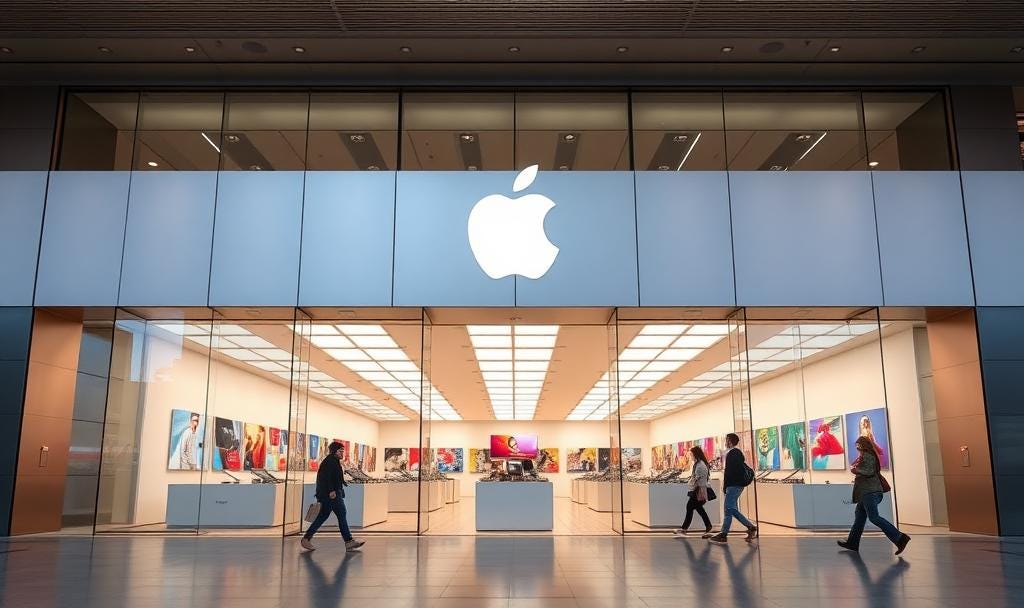
While working as the head of engineering for Apple’s Retail Real Estate group, I had the privilege of designing, building, and operating over 500 stores worldwide. These weren’t just retail spaces—they were engineered experiences, blending form and function to create something remarkable.
But what makes Apple so different? Why do its customers stay loyal, and why do its employees push themselves beyond industry norms?
WHAT I LEARNED AT APPLE
The 3 defining lessons from my time there:
• Commitment: The pursuit of perfection is both inspiring and exhausting. Every tiny detail mattered, even those 99% of customers would never notice.
• Purpose: Customer experience isn’t just a buzzword—it’s a philosophy that drives every decision, from lighting to temperature control to hidden support systems.
• Leadership: Apple’s refusal to accept “No” created groundbreaking results—but sometimes, that same mentality got in the way of efficiency.
Let’s break these down.
Commitment: Excellence in the Details
Apple’s obsession with detail is legendary. Every joint, every line, every screw—it all had to be perfect. Walk into an Apple Store, and you won’t see air vents, unsightly fasteners, or misaligned panels. Even a single screw was questioned: “Do we need four, or will one suffice?”
This commitment to being the best often clashed with industry norms. While most companies innovate where necessary, Apple innovates everywhere, even in areas where it might not be needed. Sometimes, I found myself arguing that the traditional way was the best way—but Apple’s mindset was clear: if there’s a better way, find it.
At times, though, this level of attention to detail was exhausting. We would spend hours agonizing over something only a handful of people would ever notice. And while striving for perfection is admirable, it sometimes came at the expense of aligning with Apple’s other values. For example, Apple was deeply design-focused—sometimes to a fault. More often than I’d like to admit, form was prioritized over function, and I found myself being the lone voice advocating for logic and simplicity.
🏠 Interested in starting or growing your real estate portfolio? Join a community of changemakers investing to build wealth and create impact.
Purpose: Elevating the Experience
At Apple, “customer experience” is a layered concept. There’s the obvious external customer—the one walking into the store. But internal customers mattered just as much: retail employees, engineers, and departments that made everything function.
Designing an Apple Store wasn’t just about aesthetics. It was about creating an environment where everything—temperature, lighting, shadows, air quality, and acoustics—worked in harmony. Whether there were five people in the store or two hundred, the experience had to feel the same.
One of my biggest challenges? Giant video walls that emitted so much heat that they required special cooling systems. Or four-sided glass cubes that had to withstand brutal summers and freezing winters—all while keeping customers comfortable. Every Apple Store was its own factory, running a finely tuned machine behind the scenes.
And that’s why Apple’s products and spaces feel different. It’s not just about selling technology; it’s about elevating people.
Leadership: Standing for Something—But at What Cost?
Apple’s leadership style is not for the faint of heart. Saying “No” wasn’t an option. If something seemed impossible, we found a way to make it possible. That’s how we ended up building 50,000-pound sliding doors, glass domes floating in bays, and custom architectural elements that defied industry standards.
Beyond physical stores, Apple’s leadership extended to values—sustainability, privacy, equality. These weren’t just corporate buzzwords; they were non-negotiable principles. And as an employee, you carried that responsibility. Walking into negotiations with landlords or city officials, you weren’t just representing yourself—you were representing Apple.
But here’s the thing: sometimes, not allowing “No” actually got in the way. The drive to achieve the impossible was exhilarating, but it also led to unnecessary complexity and inefficiency. Some timelines were unrealistic, some processes became bloated, and at times, the refusal to compromise slowed things down instead of pushing them forward.
The name Apple carried weight, opened doors, and demanded excellence—but it also required balance. Leadership isn’t just about charging ahead; it’s about knowing when to pause, when to simplify, and when to let practicality win over ambition.
Final Thoughts
Working at Apple changed me. It raised my standards, challenged my assumptions, and taught me what it really means to commit to excellence. It showed me that great experiences don’t happen by accident—they are engineered, down to the smallest detail.
But it also taught me something even more important: Perfection has a price. And sometimes, the hardest thing to do is recognize when “good enough” is actually the best solution.
Which of these lessons resonates most with you? Reply and let me know!
Jon
Thanks for reading Drops of Change! Subscribe for free to receive new posts and support my work.