


I keep going into the places nobody wants to show me because that is where the information is. Everything above ground has been prepared for me.
That is not cynicism about sellers. It is how a tour works. Somebody chose the route, and they chose the good unit, honestly, because that is what you do when you show your building. Pictures tell you what the picture shows. Pictures do not tell you where the pictures were not taken.
I once had a seller who wanted 200 units inspected in a single day. On site, the escorts kept steering us around certain spaces. My team tracked unit numbers and worked out which ones we had never entered. We went back. One bathroom ceiling was black across the entire surface. We walked. When somebody works that hard to keep you out of a room, the effort is the finding.
A basement is the highest-yield version of that room, and here is the specific reason. It is not a building system. It is the place where every other system’s failures show up first. Three things live down there that will not appear in any report you are handed.
The water history.
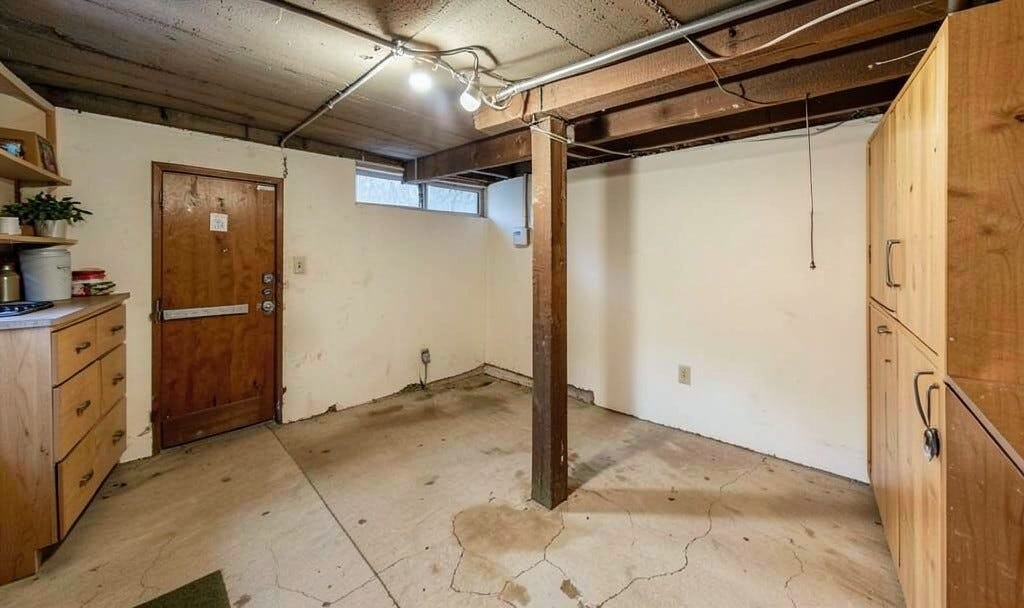
A basement keeps a permanent record of every time it has flooded, and nobody edits it.
Look at the foundation wall for a horizontal line, a change in color or texture at a consistent height all the way around. That is a tide line. Then look at the bottom few inches of every steel column and mechanical unit leg. Rust does not climb. If the rust ring on four unrelated pieces of equipment is at the same height, that height is the water line, and it did not get there once.
Look for efflorescence, the white chalky deposit on concrete. That is mineral left behind by water moving through the wall, which means the wall is a path, not a barrier. Look for a floor drain cut in after the slab was poured, or a sump pump somebody installed later. Nobody adds a sump to a dry basement.
Look at how the building stores things. If everything is on pallets and nothing sits on the floor, the staff already know something the report does not say.
🏠 Interested in starting or growing your real estate portfolio? Join a community of changemakers investing to build wealth and create impact.
How the building is actually maintained, as opposed to how it is described.
The mechanical room is a maintenance program you can see with your eyes.
Are there dates on the air filters, or are they gray. Are valves and circuits labeled, or is the panel a mystery. Look at the repairs specifically, because repair quality is the master tell. A proper coupling on a pipe repair means somebody did the job. A hose clamp and a rag means somebody stopped the bleeding and left. Duct tape anywhere is a failure unless there was an active emergency and people were standing right there.
Count the abandoned equipment. Dead units left in place because nobody wanted to pay to remove them are a deferral decision. Count the extension cords doing the work of circuits, and the junction boxes with no covers.
If the room nobody looks at is disciplined, the property is disciplined. If you can see poor issues on the surface, there are more below it. A dirty mechanical room is worse than a bad one, because when it is clean you can inspect and when it is dirty you cannot.
Where the air goes, which is where the mold goes.
Mold is the most common problem I find, and the basement is where it shows first. That is physics, not bad luck. The basement holds the coldest surfaces in the building, and warm humid air condenses on cold surfaces.
Smell before you look. Your nose beats your eyes on mold by weeks. Then check the joist bays along the rim, the underside of the subfloor, and the back of any insulation, because faced batts hide growth on the side you cannot see.
Then trace where that air goes. Warm air rises through a building and pulls basement air up behind it, through chases, stairwells, and every penetration nobody sealed. So a moldy basement is not a basement problem. It is the intake for the air your residents breathe upstairs.
One last one. I once followed workers with flashlights into the basement of a mall under construction in China. No lighting, nobody who spoke English, and the crews were using the corners as a bathroom because there was nothing else down there.
I am not telling you that to be shocking. A basement under construction with no lighting and no sanitation tells you what the supervision is on a day nobody official is watching. The concealed work in that room gets covered by drywall next week, under that same supervision.
Go alone, or go last. Bring your own light. Wear what you are willing to ruin. And if you get to choose the day, choose a rainy one.
—Jon