


Nobody ever calls an engineer about a pipe.
The call is always about pressure. The top floor has no water. The showers are weak in the morning.
In New York during a site visit, that call ended the way those calls end. The pump seemed to work fine, but 10 feet away sure enough, the pressure gauge was very different, so off are the pump.
The pipe feeding it was two inches in diameter on the outside. On the inside, was a whole different story. An inch of opening was left. Not crushed. Not bent. Caked.
Take a two-inch opening down under an inch and roughly eighty-five percent of what that pipe could carry is gone.
So the building had been screaming for months about a restriction nobody could see, and the answer everybody reached for was the one component doing its job.
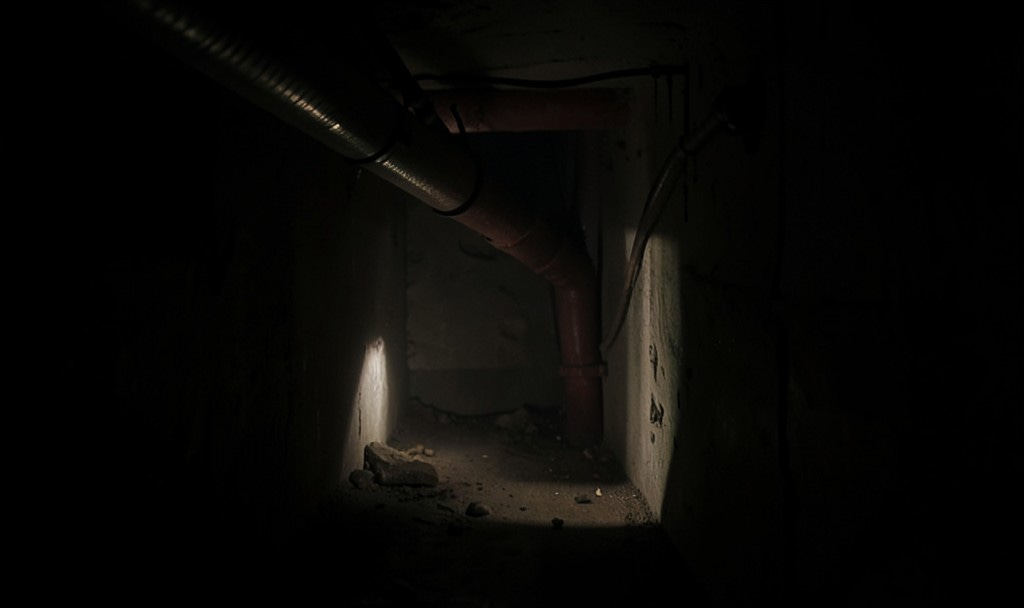
The Reality:
The building never said the pipe was closing. It said the pump was failing. Those are not the same statement, and the difference is where the money goes.
A pump not making pressure and a pipe not passing water produce an identical symptom at the tap. Weak flow. The system cannot tell you which, because it does not know. It only knows the outcome.
So somebody has to decide, and here is the rule that governs that decision in almost every building I have walked.
Diagnosis follows access, not evidence.
The pump is at the easy end. It is in a room, it has a nameplate, it has bolts. It is a thing you can carry to a truck and point at, and pointing at something is what a room under pressure wants to do. The pipe is at the other end, in a ceiling, behind drywall, above someone’s kitchen, and the only honest way to inspect it is to cut a piece out.
So blame lands at the easy end. Every time. Not because anybody is lazy, but because it is the only end anybody can reach that afternoon.
The same rule runs every system. Electrical trouble gets answered at the panel, not the conductor in the wall. Comfort gets answered at the thermostat, not the duct above the ceiling. The accessible part gets replaced and the buried part has the problem.
Now the part that changes what you do about it.
That pipe did not wear out. It filled up.
🏠 Interested in starting or growing your real estate portfolio? Join a community of changemakers investing to build wealth and create impact.
Uniform corrosion, metal thinning evenly from the inside, cannot close a two-inch pipe to one inch. The wall is not thick enough. Rust and oxide get generated somewhere else in the system, carried by the water, and put down here, wherever the flow slows enough to let go of what it is carrying. Mineral scale joins in, and so does whatever nothing is filtering out.
It grows in rings, inward, and it is porous, so it keeps building on what it has already built.
That distinction is the entire lesson, because it tells you the fix. A pipe that wore out is a materials problem and better pipe solves it. A pipe that filled up is a water problem, and better pipe just gives it a larger container to fill. You solve that with filtration and treatment, upstream, running all the time.
And notice what the building did not do while that was happening. Flow capacity does not fall off in a straight line as an opening narrows. It holds up better than you would expect for a long while, and then the last part of the closing takes almost everything at once. The system does not decline. It collapses, it looks sudden, and it was not.
By then you have paid three times. For the part you replaced that was working. For every month the building ran restricted. And for the fact that the real problem was growing the entire time.
How to tell which end it is, before anybody pulls anything.
Two checks. The first takes an hour and a pair of gauges. The second takes five minutes and a laptop.
Check one is pressure with the water still, then with the water moving.
A pump that makes its rated pressure against a closed system but cannot hold it once water is flowing is not a failing pump. That is the signature of a restriction downstream. The pump is producing. The pipe will not accept what it produces.
If pressure is low even with nothing flowing, now you are looking at supply or at the pump itself, and pulling it starts to make sense.
That comparison sorts the two most expensive guesses in the building into different bins, and it costs an hour. Run it before you authorize a replacement, not after.
Check two is your own work order history, and nobody runs it.
Search for repeats. Not by unit. By equipment, and by riser.
If this is the second pump off the same line, that is not two pump failures. That is a building telling you twice, in the only language it has, that the problem is not the pump. A repeat on the same equipment is a poor repair or a component at end of life. A repeat on the same line, different component each time, is the line.
Your work order system can almost certainly sort by equipment. It is the cheapest diagnostic in this email, and it is sitting in software you already pay for.
Then one question before you spend money. What is filtering the water in this system, and when was it last serviced?
The tell is not whether the part exists. It is whether anybody has a record of servicing it, with dates. A filter nobody has opened in four years is either clean and irrelevant or packed solid and now part of the restriction you are hunting.
The service record is the diagnostic. The part is just hardware.
The bottom line.
The symptom points at the equipment. The failure is in the distribution.
That is true of water, and of a great deal of what goes wrong in a building. The part that announces the problem and the part that has it are rarely the same, and the announcing part is almost always easier to reach, easier to price, and easier to put on a truck.
When something seems wrong, it usually is. The skill is not sensing that. Everybody senses that. The skill is refusing the first component that is convenient to blame.
Anybody can replace the part they can reach. What you are learning to do is ask which part you cannot.
—Jon
P.S. What is the most expensive thing you have replaced that turned out to be working fine? Hit reply and tell me what it was and what it actually turned out to be. I read every one.