


Most investors focus on spreadsheets—rent rolls, comps, pro formas.
I focus on something else: what can quietly bankrupt you.
Because the biggest risks in real estate rarely show up in Excel. They hide in the mechanics of the building itself.
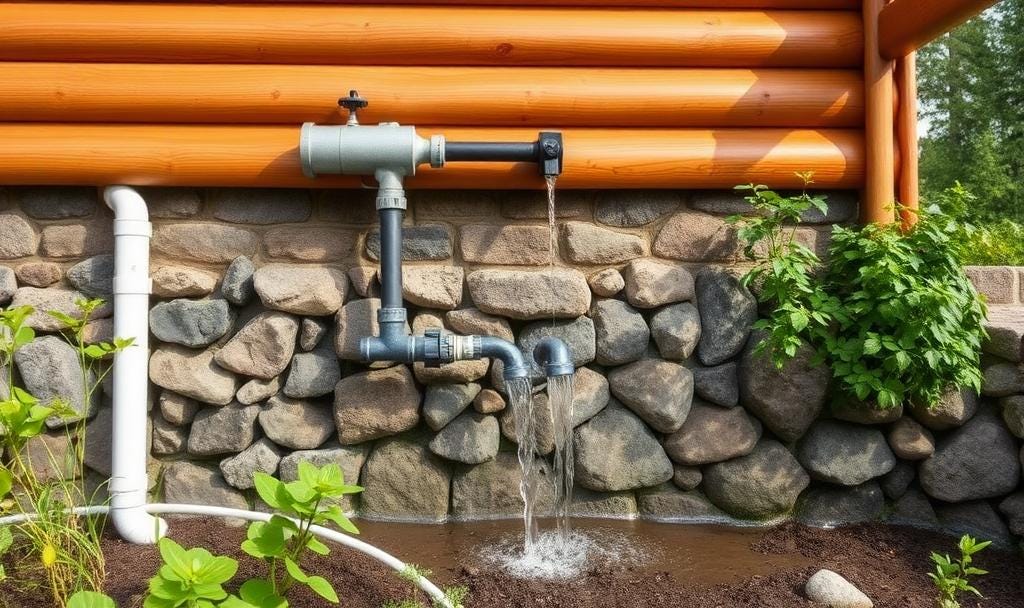
The Two Checks That Never Leave My List
In this issue, we’ll look at:
The one structural signal that predicts future capex problems
Why water management determines the real lifespan of a property
How mechanical due diligence protects your downside and your returns
1. Structural Integrity — The Building’s True Lifespan
Every structure tells a story—if you know how to read it.
Before I ever underwrite a deal, I check for cracks, foundation shifts, and settlement patterns. These are the early warnings of fatigue, neglect, or flawed construction.
A small crack might look cosmetic on a walkthrough, but to an engineer, it’s a timeline. It tells you how long the building has left before it demands capital.
I’ve walked deals where a $200K acquisition budget turned into $1.5M in structural remediation—because no one questioned the “hairline” cracks.
Structural integrity isn’t about appearances. It’s about physics.
And physics doesn’t care about your rent growth assumptions.
A strong foundation gives you predictability. A weak one gives you surprises—and surprises are the enemy of cash flow.
🏠 Interested in starting or growing your real estate portfolio? Join a community of changemakers investing to build wealth and create impact.
2. Water Management — The Silent Killer of Returns
If structural issues are the bones, water is the disease that eats them.
I check gutters, grading, drainage, and downspouts with the same intensity I review a P&L.
Because water doesn’t care about your business plan.
It follows gravity. It finds every gap, every slope, every weakness—and it compounds over time.
Poor drainage means moisture intrusion. Moisture means mold.
Mold means health hazards, tenant turnover, insurance claims, and unplanned capex.
I’ve seen investors lose millions not because of poor management—but because they underestimated the relentless simplicity of physics.
One inch of standing water today can turn into structural rot in a year.
And the best operator in the world can’t “manage” their way out of that.
The Real Meaning of Due Diligence
Good due diligence isn’t about checking boxes or completing inspection reports.
It’s about understanding where risk hides and how it behaves over time.
Ignore the mechanics, and the math won’t save you.
Underwrite the rent roll all you want—but until you understand how a property breathes, drains, and settles, you’re flying blind.
Because financial models are built on assumptions.
Buildings are built on soil, steel, and systems.
And only one of those obeys the laws of physics.
Spreadsheets don’t tell you when a building will fail—its structure does. The best investors know how to read both.
Cheers,
Jon