


Water damage cost me a deal once.
It was a 32-unit building. Numbers looked perfect. Pro forma was clean. I almost wired the deposit.
Then I walked the property.
Baseboards in the first-floor units were bubbling. Ceiling stains on the top floor had been painted over, not fixed. The foundation perimeter sloped toward the building instead of away from it.
Three signs. One conclusion: this building had chronic water intrusion. And nobody was fixing the source.
I walked away.
Six months later, I heard what happened. The new buyer discovered mold in 14 units. $180,000 remediation. Insurance claim denied.
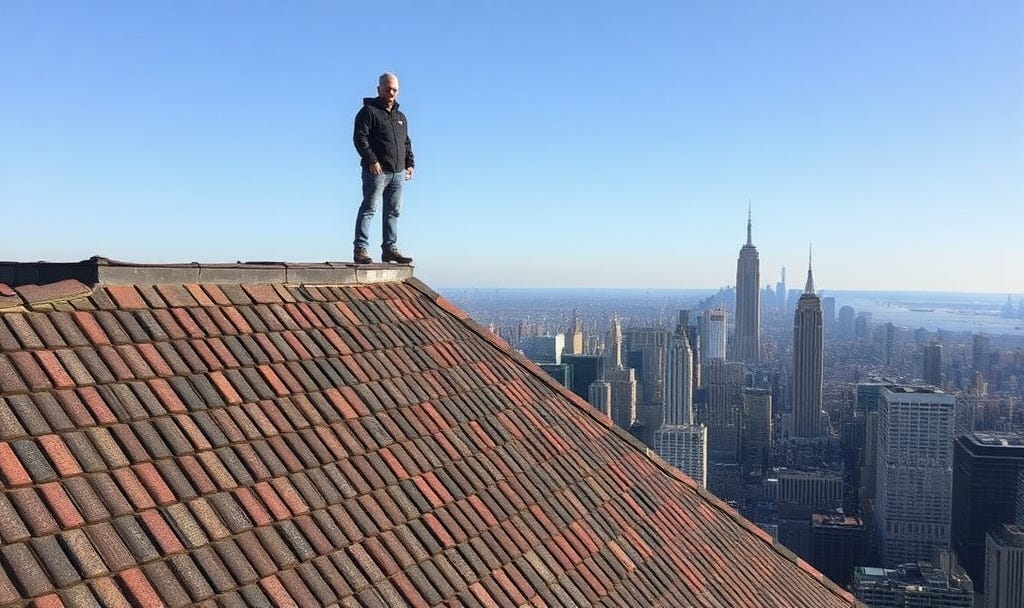
The Reality: The inspection report is a starting point. It’s not the answer.
But here’s what most investors miss. The things that destroy a roof don’t look like damage. They look like nothing. A shallow puddle. A soft spot. A tiny gap in the flashing. You’d walk right past all of it if you didn’t know what you were looking for.
I start with ponding water. Places where drainage is failing. Standing water means the membrane is breaking down underneath, and every rain cycle accelerates it. That’s not a future problem. That’s a problem happening right now, in slow motion.
Then I check for soft spots that give beneath my weight. That’s trapped moisture hiding between the membrane and the deck. You won’t see it. You’ll feel it. And if you don’t walk the roof yourself, nobody’s going to feel it for you.
Flashing at walls and curbs is next. That’s where water finds its way in. Every penetration, every HVAC unit, every pipe that breaks through the roof surface is an invitation for moisture if the seals aren’t right.
And I bring a thermal imaging camera. Your eyes see the surface. The camera sees what’s hiding beneath it. Moisture trapped under the membrane shows up as a temperature differential. It turns guesswork into data.
🏠 Interested in starting or growing your real estate portfolio? Join a community of changemakers investing to build wealth and create impact.
This matters because roofs are expensive. Replacement runs $8 to $15 per square foot. On a 50,000 square foot building, that’s $400,000 to $750,000. That number won’t appear in the seller’s pro forma. But it’s real. And if you miss it, it becomes yours the moment you sign.
One missed assessment. Returns destroyed.
I’d rather sweat for an hour than write a check for $750,000 I didn’t plan for.
Even with all of this, problems still come. A hailstorm doesn’t check your underwriting first. But the difference between a disciplined investor and a hopeful one is simple. You have to look. You have to do the work before you write the check.
The roof is the building’s first line of defense. It takes the sun, the rain, the freeze-thaw cycles. It protects every tenant, every system, every dollar of NOI. And it’s the first thing most investors skip.
The Bottom Line: Most investors underwrite the spreadsheet. I underwrite the building, starting from the top. Real estate isn’t just math. It’s math plus mechanics. Ignore the mechanics, and the math will eventually lie to you. Most investors trust a report. You’re learning to trust the roof beneath your feet. That’s the difference between hoping a deal works and knowing why it will.
When’s the last time you actually walked a roof before investing?
If you want to see what a proper physical assessment looks like, I’m happy to walk you through our process.
Cheers,
Jon
P.S. The best-looking deals on paper sometimes hide the biggest problems overhead.