


Fall is here, interest rates took a cut as expected, but is that really the news you need? Lowered borrowing costs are definitely a good thing, but it's just a piece of the puzzle.
In today’s evolving socio-economic landscape, finding strong, stable investments can be challenging. Multifamily has seen tremendous stress due to rising debt, inflationary pressure on rents and even consumer downsizing.
Not all is lost though. Many investors overlook manufactured homes, often swayed by outdated misconceptions that mobile home parks are "low quality."
That is far from the truth. In fact, this asset class presents an incredible opportunity for those willing to explore its benefits: resilience, growth and cost efficiency.
The most resilient real estate asset class
Today, we’ll uncover the truth about mobile home parks and explore...
The Truth About Mobile Home Parks
Why They Are a Resilient Asset Class
The Massive Untapped Potential
The Truth About Mobile Home Parks
For years, mobile home parks (MHP) have been stigmatized as low-quality housing for low-income persons. But the reality couldn’t be further from the truth. Modern manufactured homes are built to strict HUD standards, providing comfortable, affordable housing that meets the needs of a growing population.
Mobile home parks attract a broad demographic, including retirees and low-to-middle-income families, who prefer affordable living options in a secure community.
This consistent demand with comparatively lower cost of ownership help produce stable cash flow, making mobile home parks an appealing alternative to more volatile real estate sectors.
Why They Are a Resilient Asset Class
In times of economic downturn, many real estate investments suffer from high vacancy rates, declining property values, or shrinking rent yields.
Manufactured mobile homes, however, have proven to be remarkably resilient. Look at past performance in the chart below during the 2008 financial crisis.
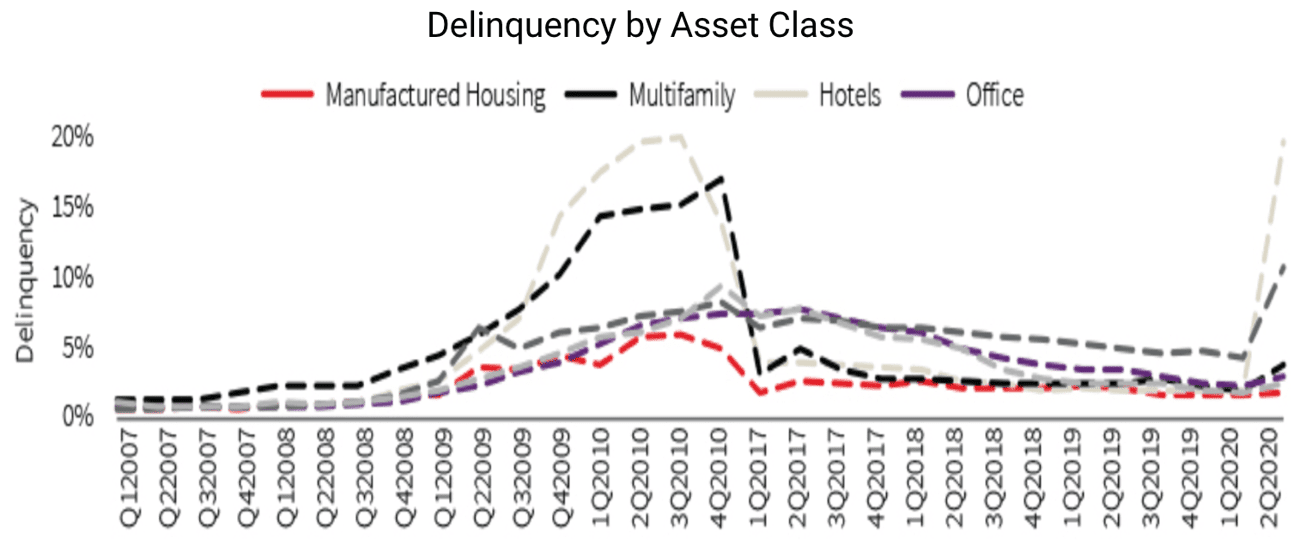
As delinquency rates soared in multifamily assets, mobile home parks saw small, negligible increases.
Due to their affordability, mobile homes remain in high demand, even when other sectors struggle. In fact, rent growth and occupancy levels have consistently remained strong, even during periods of economic stress.
This resilience is further strengthened by the lower cost of ownership and maintenance for mobile homes compared to traditional housing. Investors can enjoy a high return on investment (ROI) without the operational headaches commonly associated with multi-family or single-family properties.
🏠 Interested in starting or growing your real estate portfolio? Join a community of changemakers investing to build wealth and create impact.
The Massive Untapped Potential
Approximately 4 million homes are needed to meet current demand, and mobile homes are perfectly positioned to help fill this gap. We think this demand is only the tip of the iceberg. Affordability in housing is defined as individuals spending no more than 30% of their gross income on housing. Spending above this limit you are considered cost burdened. Look at the graphic below that aligns income to number of housing units available within the affordability definition to the specific income bracket.
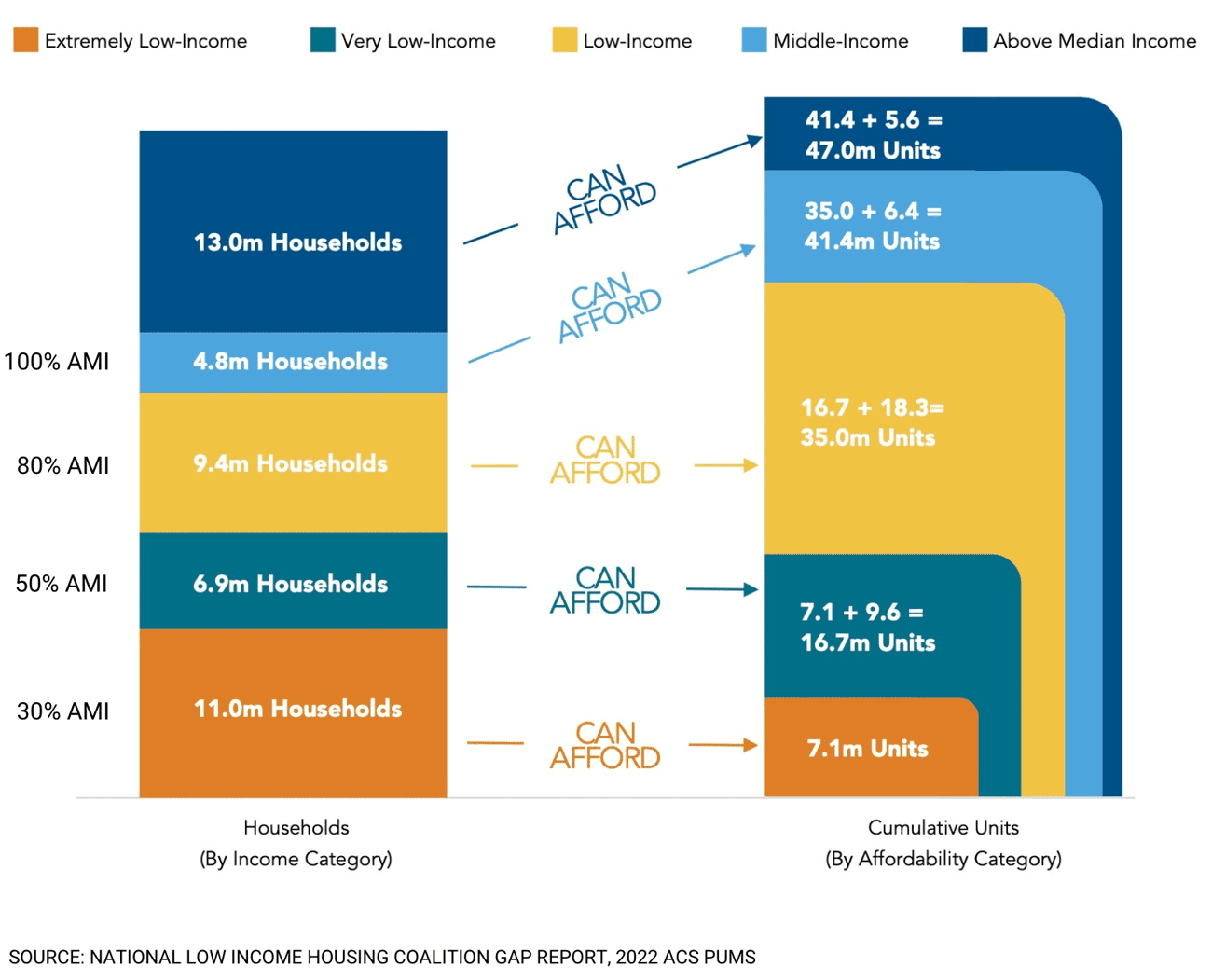
Living costs are increasing faster than salaries and as many American’s look to downsize and spend more time and money on leisure they must reduce a large expense, housing. So as these individuals in higher income brackets seek cheaper housing alternatives, their income levels give them access to a greater housing stock while simultaneously shrinking the housing availability of individuals in the lower income brackets that do not have the luxury of of housing choice.
Couple this with the largest annual number of new retirees in US history and pressure is mounting. 4.1 million baby boomers will retire every year through 2027, but at a median income of just $47,000 (The median US household income today is approximately $76,000). That's even more pressure coming to the housing market. Stigma or not, many people soon might not have a choice at all on where they live, it might be made for them.
Institutional players in the MHP market are focused on high-quality, grade-A MHP assets. With mobile home park ownership heavily leaning toward family/privately owned parks by aging individuals who are readying for retirement, we believe early buyers will have great leverage.
MHP's offer significant tax advantages over other asset classes. The 2017 Tax Cuts and Jobs Act offers unique depreciation benefits for MHP investors. With approximately 70% of the acquisition costs depreciable through bonus depreciation int he first year, there is a potential write off of up to 120% of the initial investment in year 1 (consult with your tax advisor on specifics).
Despite their strong performance, mobile home parks are still vastly underutilized by mainstream investors.
By looking beyond the myths surrounding mobile home parks, savvy investors can capitalize on a stable asset class that has consistently delivered results.
This is not a fad, it’s not a trend. Today, 75% of Americans cannot afford the average-priced home and the next 10 years will see massive challenges within our county.
At Blue Eyed Capital we are positioning ourselves to not only take advantage of this, but to be part of the solution and as an Investor, you should too.
We have some great editions coming up. Be on the look out in 2 weeks!!
Jon
Thanks for reading Drops of Change! Subscribe for free to receive new posts and support my work.